How long does a roof last?
Typical lifespans for every common roof covering, and the signs that yours is running out.
 12
It depends on the covering. Natural slate and clay tile can last a century or more, concrete tile around 50 to 60 years, and flat roof coverings from 10 to 30 years or longer depending on the material. The underlay, fixings and mortar usually wear out before the tiles do, so a roof often needs work long before the covering itself fails.
Last reviewed by Matt Novell
What are typical lifespans by material?
These are typical ranges for roofs in the south of England, assuming reasonable workmanship and maintenance. Exposure, pitch and build quality move a roof well outside them in either direction.
| Covering or component | Typical life | What usually ends it |
|---|---|---|
| Welsh natural slate | 80 to 150 years | The fixing nails corrode long before the slate wears out |
| Clay plain tile, hand-made or machine-made | 60 to 100 years or more | Frost damage, broken nibs, failed battens |
| Concrete tile | 50 to 60 years | Surface erosion, then the felt beneath |
| Bituminous underfelt | 40 to 60 years | Turns brittle and tears, first at the eaves |
| Mortar bedding at ridge, hip and verge | 20 to 30 years | Frost and movement crack it |
| Felt flat roof, older built-up type | 10 to 20 years | Blistering, cracking, failed laps |
| Modern torch-on felt flat roof | 20 to 30 years | Laps and upstands |
| EPDM rubber flat roof | 25 years or more | Edge and upstand detailing |
| GRP fibreglass flat roof | 20 to 30 years | Cracking along board joints |
| Lead flashings and valleys | 60 years or more | Splitting from thermal movement where sheets are too long |
| Thatch, depending on material | 15 to 40 years | Ridge wear first; the ridge needs renewing more often |
What wears out first?
Rarely the tiles. On most pitched roofs the first things to go are the mortar at the ridge and verges, then the fixings, then the underfelt.
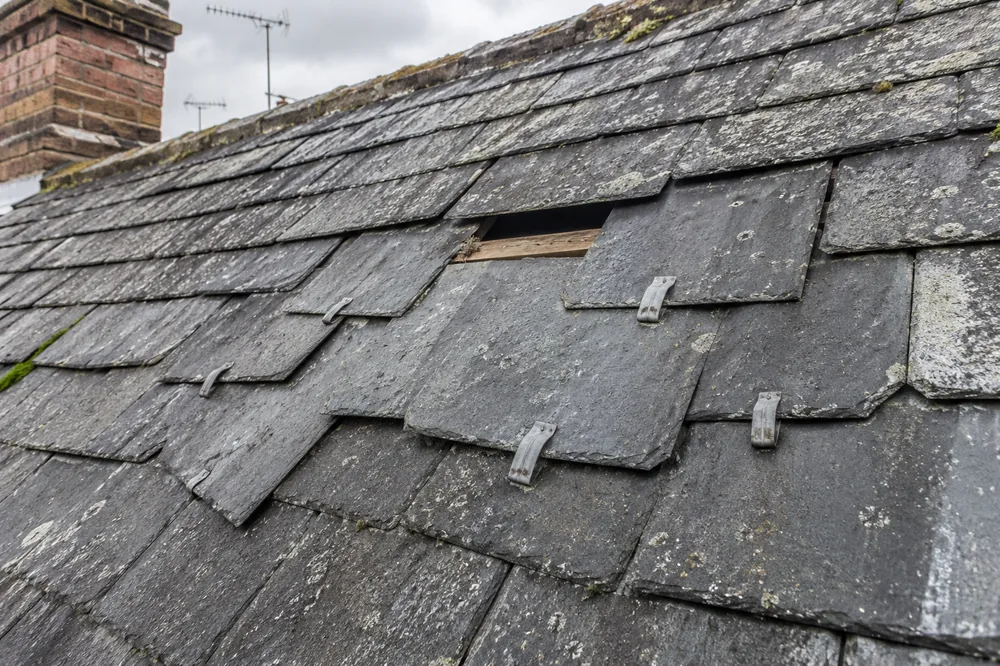
This is why a roof with sound-looking tiles can still be in trouble. A slate roof where the nails have rusted is said to be nail-sick: the slates slide out one by one although nothing is wrong with them. A concrete tile roof may shed water perfectly while the felt beneath has perished at the eaves and is letting wind-driven rain onto the rafter feet.
It also means repair is often possible. Re-bedding a ridge, fitting eaves support trays or re-fixing a slope of slates can add years to a roof at a fraction of the cost of replacing it.
What shortens a roof's life?
Water staying where it should not, and anything that stops the roof drying out.
- Exposure to wind and driving rain on hills and coasts.
- Shallow pitches, where water runs off slowly and backs up under the laps.
- Overhanging trees, moss and blocked gutters holding moisture against the covering.
- Poor loft ventilation, which lets condensation rot battens and rafter feet.
- Walking on the roof, which cracks tiles and slates.
- Heavier replacement coverings on a structure built for lighter ones.
- Pressure washing, which strips the surface from concrete tiles.
What are the signs a roof is near the end?
Individually these are repairs. Several together, across the whole roof, suggest the covering is at the end of its life.
- Slipped or missing slates and tiles on more than one slope.
- Many lead or copper clips holding slates in place.
- Concrete tiles worn rough, with the aggregate showing.
- Daylight visible through the roof from inside the loft.
- Felt hanging in torn strips between the rafters.
- A ridge line that dips, or slopes that sag between the walls.
- Damp staining on rafters or on bedroom ceilings near the eaves.
A condition report puts a number on it: a grade for each element and an estimate of the years remaining, so you can budget instead of waiting for a leak.
Roof Condition Report
A roof condition report is an independent document describing the condition of every roof element, graded 1 to 3 on a traffic-light scale, with numbered photographs, a costed repair schedule in bands and a remaining-life estimate.
Sample report
Nine pages, fictional property: summary, lender page, graded findings and costs.
Common questions
Start with the age of the house: unless there is evidence of re-covering, the roof is usually original. Signs of a later roof include modern underlay visible in the loft, tiles that do not match the neighbours, and building control records. A survey will tell you which you have.
Often. If the covering is sound and the failure is in the mortar, fixings or eaves felt, repair is the sensible answer. Replacement makes sense when the covering itself has failed across the roof, or when repairs have become frequent.
A full strip and re-cover of a typical house roof falls between £4,000 and £15,000, depending on size, covering, access and scaffolding. Natural slate, hand-made clay tile and listed buildings cost more.
Every few years on a roof past its mid-life, after any severe storm, and before buying. A roof inspected regularly rarely fails without warning.
More guides
Slate roof replaced with concrete tiles: is it a problem?
Why heavier tiles on a Victorian roof worry valuers, and how to tell if the structure is coping.
Read the guideStorm damage or wear and tear: how insurers decide
How an insurer separates storm damage from a worn-out roof, and the evidence that supports a claim.
Read the guideA roofer says I need a new roof. Do I?
How to test a recommendation for a new roof before you spend five figures on it.
Read the guideWant the roof checked properly?
Independent inspection, graded report in 48 hours, no repairs sold.
01252 447 731