Roof Insurance Claim Report Storm Damage or Wear and Tear?
The storm took tiles off on Saturday night and water came through the back bedroom ceiling. The insurer wants evidence that it was the storm and not a roof that was already failing. Your roofer's estimate is being questioned by a loss adjuster. We inspect, photograph and document the roof independently, separate storm damage from wear and tear, and cost the reinstatement in bands the adjuster can test.
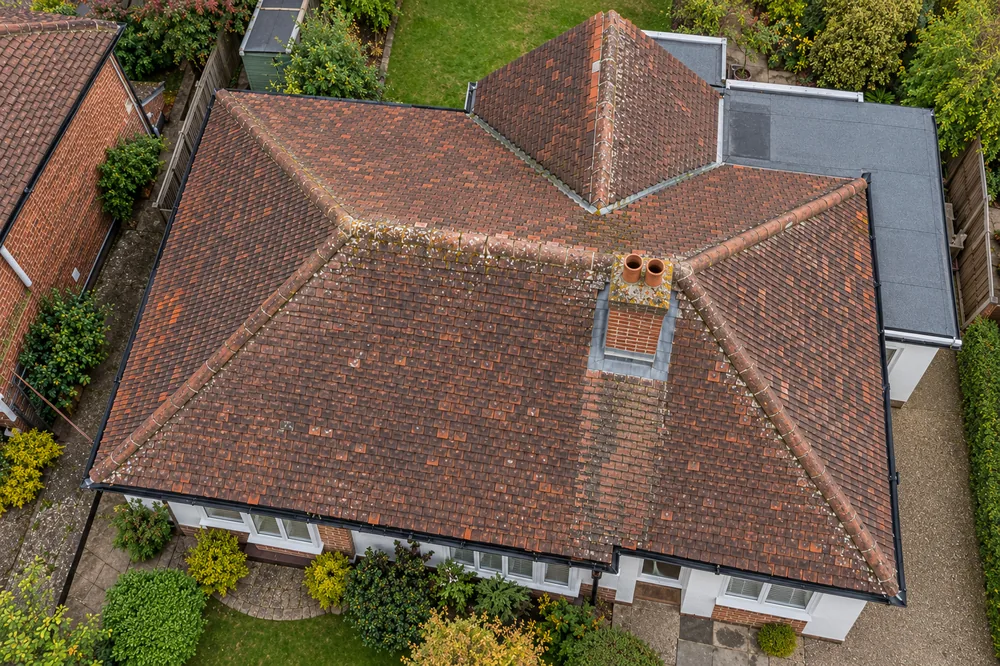
Roof Insurance Claim Report explained
A roof insurance claim report is an independent, photographed record of roof damage prepared to support a buildings insurance claim. It identifies which defects are consistent with a sudden event such as a named storm and which are pre-existing wear, costs reinstatement in bands, and records the loft to confirm the water path. £299, issued within 48 hours.
Last reviewed by Matt Novell
- Will my insurance pay for storm damage to the roof?
- How does the report separate storm damage from wear and tear?
- What is 'escape of water' and how is it different from a roof leak?
- How do I deal with a loss adjuster who disputes my roofer's estimate?
- What is betterment and why does it reduce my payout?
- When should I book the inspection after the damage?
Will my insurance pay for storm damage to the roof?
Buildings insurance normally covers sudden damage caused by storm, which most policies define by wind speed, usually gusts of 47 to 55 mph or more, or by heavy rain, snow or hail. It does not cover wear and tear, gradual deterioration or defects that would have failed anyway. The claim turns on which category each item of damage falls into.
The Met Office named storms that crossed Hampshire, Surrey and Berkshire in recent winters produced gusts of 60 to 80 mph at Farnborough and Odiham, and insurers accept those dates as storm conditions without argument. The dispute is almost never about whether there was a storm. It is about whether the storm damaged a sound roof, or merely finished off a roof that was already failing.
A loss adjuster looking at a Victorian slate roof with twenty slipped slates after a storm will ask why the slates slipped. If the drone photographs show rusted nail heads on the remaining slates, the adjuster will argue nail sickness, which is wear and tear, and reject or reduce the claim. If the photographs show sound fixings on the undamaged slates and a clean failure line where the wind got under a ridge, the claim is for storm damage. Our report records both kinds of evidence so the answer is based on what is there.
Policies also exclude damage from poor maintenance, so a flat roof that ponded because the outlet was blocked with leaves will be contested. The report says what we found, including the blocked outlet if it is there.
How does the report separate storm damage from wear and tear?
By photographing the damaged and undamaged areas side by side and describing the condition of each. Storm damage has a pattern: it is on the windward slope, it follows a line, it affects sound tiles and fixings, and the loft staining below is fresh. Wear is uniform and older, with corroded fixings, delaminated tiles or perished felt throughout.
On each affected element the report records three things: the damage, the condition of the adjacent undamaged material, and whether any older staining or repairs exist in the loft below. A chimney whose pots were blown off is photographed in 360 degrees so the adjuster can see whether the flaunching was cracked before the pots went. A ridge that lifted is photographed with the mortar bed exposed so the adjuster can see whether it was bonded or already loose.
We also record weather exposure. A south-westerly storm damages south-west-facing slopes. If the damage claimed is on the north-east slope, the adjuster will notice, and so do we. Where damage is on a lee slope it is sometimes legitimate because of turbulence over the ridge, but it needs explaining, and the report explains it.
The costed schedule separates storm reinstatement from pre-existing defects. The adjuster sees that the £1,800 for re-fixing and replacing the displaced tiles is the claim, and the £700 for the perished lead on the other chimney is not, and the claim is settled on the right figure instead of being rejected as a whole.
- Damage location relative to wind direction on the storm date
- Condition of fixings, tiles and mortar adjacent to the damage
- Fresh versus historic staining on loft timbers below the damage
- Evidence of prior repairs, patching or sealant in the affected area
- Blocked outlets, gutters or valleys that would indicate maintenance issues
- Reinstatement costed separately from pre-existing defects
What is 'escape of water' and how is it different from a roof leak?
Escape of water, in insurance terms, means water leaking from a pipe, tank, appliance or fixed installation inside the building. A roof leak is rainwater entering from outside, which is usually covered only if it results from storm damage. Insurers treat them differently, and misdescribing a roof leak as escape of water, or the reverse, delays the claim.
The loft inspection is what settles this. A stain on a bedroom ceiling under a bathroom may be from the bath waste or from the roof valley directly above. From the loft we see whether the staining is on the underside of the roof felt and running down a rafter, which is ingress, or on the top of the ceiling plasterboard only and centred under a pipe run, which is escape of water. The photographs go in the report with the path described.
This matters for the excess and for the claim history. Escape of water often carries a higher excess and counts against you at renewal more heavily than storm damage. Getting the cause right at the outset means the claim is made under the right section of the policy and the loss adjuster is not sent down the wrong path.
Where the cause is condensation rather than either, which is common in poorly ventilated lofts in winter, the report says so. Condensation is not insured, but knowing that saves the cost of a claim that will be refused and points to the ventilation fix instead.
How do I deal with a loss adjuster who disputes my roofer's estimate?
Give the adjuster an independent report rather than a second roofer's quote. Adjusters discount contractor estimates because the contractor is paid when the claim succeeds. A report from an inspector with no stake in the outcome, with photographs keyed to a plan and costs in bands, is evidence the adjuster has to engage with on its merits.
Adjusters are not the enemy, but they are instructed by the insurer and their job is to validate the claim against the policy. Where they see a roofer's estimate for £6,000 of storm repairs to a roof that photographs as tired, they will send their own surveyor, who may report wear and tear, and the claim stalls. If your report has already separated the storm damage from the wear, costed each, and photographed the evidence, the adjuster's surveyor is checking our work rather than starting from scratch.
We are often instructed after the first rejection letter. That is fine; the evidence is still on the roof unless it has been repaired. If emergency repairs have been done, send us the roofer's photographs and we record the current state and comment on consistency. Do not let a contractor strip the damaged area before it has been photographed by someone independent.
The report is addressed to you, the policyholder. We can address it to the insurer or adjuster if you prefer, and we will respond in writing to a specific question from the adjuster about our findings at no charge within three months.
What is betterment and why does it reduce my payout?
Betterment is the principle that an insurer reinstates what was there, not something better. If a storm destroyed a 40-year-old felt flat roof, the insurer pays for a felt roof, not an upgrade to GRP, and may deduct for the age of the original. A sound roof storm damaged carries little betterment; a worn roof carries a lot.
This is why the remaining-life estimate in our report matters to a claim. If the covering had 15 years left and the storm displaced a section, reinstatement with like-for-like is nearly full value and the insurer has no betterment argument. If the covering had two years left, the insurer will argue that the storm merely advanced an inevitable replacement, and will offer a contribution rather than the full cost.
Our report gives a reasoned remaining-life estimate for the covering as a whole and distinguishes it from the damaged area. That stops an adjuster treating ten displaced tiles on a roof with 20 years of life as if the whole roof were due for replacement, and equally it stops a policyholder claiming a full re-roof for a storm that moved a few tiles on a roof that was already finished.
Where a full replacement is the only practical repair, for example a felt flat roof split across half its area, the report says so and gives the band, £800 to £6,000 for a typical domestic flat roof, so that the betterment discussion is about a percentage of a known figure rather than an argument about whether replacement is needed at all.
When should I book the inspection after the damage?
As soon as it is safe and before permanent repairs are made. Emergency work to stop water entering is allowed under most policies and should be done; photograph everything first. We usually attend within five working days, longer in the week after a named storm. The drone needs no scaffold, so access causes no delay.
Keep the displaced tiles, slates or pots if they have landed in the garden. The adjuster and we can see from a broken tile whether it was sound or delaminated before it fell. Keep the roofer's emergency invoice and any photographs they took. Note the date and time the damage was noticed and, if you can, the weather that night; we add the recorded gust speeds at the nearest station to the report.
If water is still coming in, the loft inspection will show the active path and that is strong evidence of cause. If it has dried out, the tide marks remain and we photograph them. Either way, the earlier we attend the clearer the separation between fresh and historic staining, which is often the decisive point.
After settlement, if the insurer requires confirmation that the works have been completed before releasing the final payment, our £99 re-inspection provides that with photographs from the original positions.
What does the report cover?
- Drone photographs of the damaged elements and all undamaged slopes for comparison
- Wind direction and recorded gust speeds for the claimed storm date
- Element-by-element condition grades across the whole roof
- Separation of storm damage from pre-existing wear in the schedule
- Loft inspection to confirm water path and date staining as fresh or historic
- Escape of water versus ingress versus condensation determination
- Costed reinstatement schedule in bands, storm items separated from maintenance items
- Remaining-life estimate for the covering to inform betterment discussions
- Record of emergency repairs already carried out and their adequacy
- 25 to 40 numbered photographs keyed to a roof plan
- Report addressed to policyholder, insurer or adjuster as instructed
- Written response to one adjuster query within three months at no charge
From booking to report in four steps
Make the roof safe, then book
Have emergency repairs done if water is entering, photograph before and after, and book at /book/ with the storm date and claim reference in the notes.
Inspection within days
Drone survey of the whole roof, loft inspection to trace the water path, ladder check of gutters and flat roofs. Displaced materials examined if kept.
Report within 48 hours
Storm damage separated from wear, each costed in bands, with photographs and wind data. Addressed to you or the insurer as you prefer.
Support through the claim
We answer one written adjuster query at no charge. After works, the £99 re-inspection confirms completion for final payment release.
What does a roof survey cost?
Prices include travel within 30 miles of Fleet. Zone 2 adds £40, Zone 3 adds £80. Add thermal leak tracing for £75, a second building for £99, or a 24-hour turnaround for £50. Card payment on booking; the report is released on payment.
Drone Roof Report
Drone survey of every slope, ridge, valley, flashing and chimney. Photographed defect schedule with condition grades. PDF in 48 hours.
Book this reportFull Roof Condition Report
Drone survey plus loft inspection, gutters and fascias, costed repair schedule and remaining-life estimate. Our most-booked report.
Book this reportPre-Purchase Roof Report
Full report plus a one-page lender summary and a 15-minute call to walk you through it before exchange. 24-hour option available.
Book this reportFull breakdown on the roof survey cost page. Questions? Call 01252 447 731.
Report required by your lender or solicitor?
Send us the valuer's wording or the solicitor's request when you book. We address the report to whoever needs it, quote their condition on page one, and answer it directly. Call 01252 447 731 if the mortgage offer has a deadline and we will prioritise the slot.
Sample storm damage report
Six pages: each defect marked storm damage or pre-existing wear with the evidence for each, the wind-direction check, and costs split into insured repairs and maintenance for the loss adjuster. Fictional property, illustrative photographs.
Other roof surveys we carry out
Pre-Purchase Roof Survey
A pre-purchase roof survey is an independent inspection of a house you are buying, carried out before exchange of contracts.
Read moreRoof Survey for Mortgage
A roof survey for mortgage purposes is an independent inspection ordered because the lender's valuer has flagged the roof.
Read moreRoof Condition Report
A roof condition report is an independent document describing the condition of every roof element, graded 1 to 3 on a traffic-light scale, with numbered photographs, a costed repair schedule in bands and a remaining-life estimate.
Read moreDrone Roof Survey
A drone roof survey is a close-range photographic inspection of a roof from the air by a CAA-registered operator.
Read moreRoof Insurance Claim Report
A roof insurance claim report is an independent, photographed record of roof damage prepared to support a buildings insurance claim.
Read moreSpray Foam Roof Inspection
A spray foam roof inspection records the type of foam applied under a roof, open or closed cell, the proportion covered, whether the rafters and felt beneath can be inspected, evidence of damp or decay, and ventilation.
Read moreLandlord Roof Inspection
A landlord roof inspection is an independent, graded condition report on a rented property's roof, loft and gutters, used to evidence compliance with Section 11 of the Landlord and Tenant Act 1985 and the Homes (Fitness for Human Habitation) Act 2018, to plan maintenance and to answer tenant damp reports.
Read moreRoof Leak Detection Survey
A roof leak detection survey traces water entry from the ceiling stain back to the external defect.
Read morePre-Solar Roof Survey
A pre-solar roof survey assesses whether a roof is fit to carry solar panels for their 25-year life.
Read moreRelated guides
Roof Insurance Claim Report questions
For claims under about £1,000 a roofer's estimate and photographs are usually enough. Above that, or whenever a loss adjuster is appointed, an independent report is what moves the claim. Adjusters discount contractor estimates because the contractor benefits from the claim. Our report has no stake in the outcome and says so on the front page.
Most UK policies define storm by reference to gusts of 47 to 55 mph or more, sometimes expressed as Beaufort force 10. Some use force 8. We record the maximum gust at the nearest Met Office station on the claimed date, usually Farnborough, Odiham or Heathrow, and include it in the report so the threshold question is answered with data.
Often. We inspect the damaged and undamaged areas and describe the condition of fixings, tiles and loft staining. If the evidence supports a sudden failure of sound material we say so with photographs. If it supports wear and tear, we say that too, saving you the cost of a claim that will fail. The report is independent in both directions.
Yes, and it is the best time. Our report then goes to the adjuster before or at their visit, and their surveyor is checking documented findings rather than forming a first impression from the ground. We can usually attend within two to three working days of booking.
Yes. Gutters, downpipes, fascias and soffits are inspected at ladder height and flat roofs are photographed by drone. Storm damage to rainwater goods is commonly claimed and commonly contested on maintenance grounds, so the report records whether gutters were clear and brackets sound before the event where the evidence allows.
We address the report to the insurer or adjuster if asked, and we will answer one specific written question about our findings at no charge within three months. We do not negotiate the claim or act as your representative. If the claim becomes a formal dispute you may need a loss assessor, who works for you rather than the insurer.
That helps the claim. We photograph the active ingress point in the loft and trace it to the external defect. Thermal imaging, £75 as an add-on, can map the wet area in the ceiling and loft insulation to show the extent. Make sure emergency repairs are photographed before they are done so the original state is on record.
Yes. If a storm repair was done badly and the roof leaks again, the report records the current workmanship with photographs: unfixed tiles, lead not dressed, felt not lapped. That is often enough to get the contractor back, and it is the evidence a solicitor or trading standards would ask for if it goes further.
Where we carry out roof surveys
Based in Fleet, Hampshire, covering a 90-mile radius in three travel zones. Every town below has its own page with local housing stock, what valuers flag there and drone access notes.
Why not just ask a roofer?
A roofer looks at a roof to price the work they would like to do on it. That is not dishonesty, it is the job. An independent report has no work attached: every finding is graded against a fixed scale, photographed, and costed in bands so you can take it to any contractor, lender or insurer. We never quote for repairs and we have no referral arrangement with anyone who does.
If the report does find work, you choose the roofer. We will tell you what a fair price band looks like for each item, which is often the most valuable page in the document.
Based in Fleet, Hampshire · covering Hampshire, Surrey, Berkshire, Sussex and the South
Phone: 01252 447 731
Email: info@southernroofsurveys.co.uk
Hours: Mon–Fri 8am–6pm · Sat 8am–1pm
Reports: PDF within 48 hours of inspection
Book your roof insurance claim report
Fixed price, independent, PI insured, report in 48 hours. Book online in two minutes or call to talk it through first.
01252 447 731