Roof Survey Glossary Report Terms Explained
Valuers, surveyors and roofers use words that most home buyers have never needed before. This page defines every term that appears in our reports and in the lender and survey documents our clients send us, in plain English.
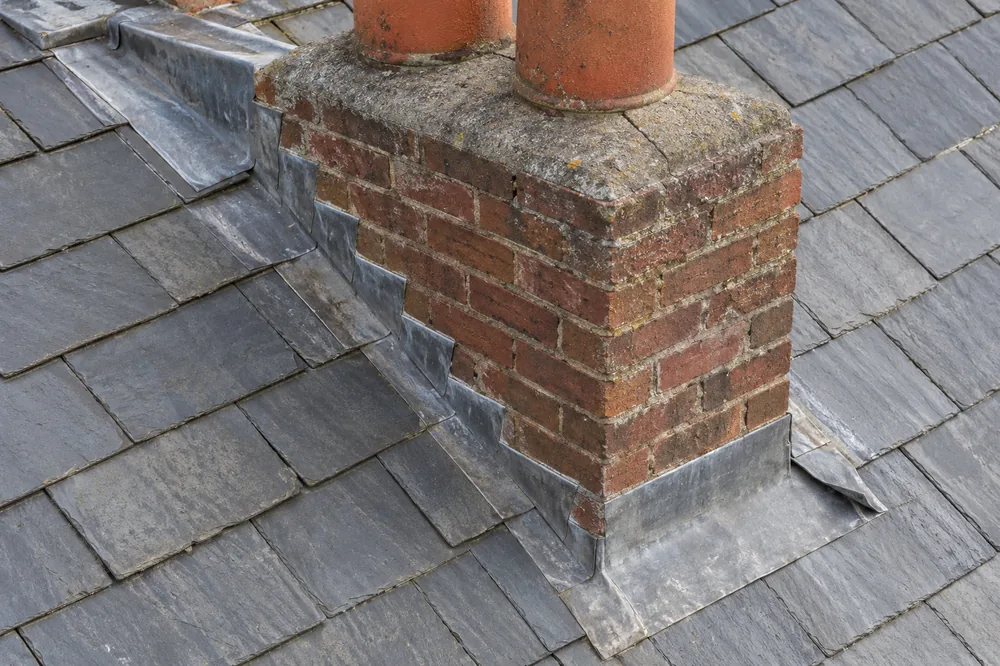
Roofing terms used in survey reports
A roof survey glossary explains the technical terms used in roof condition reports, home surveys and mortgage valuations. The terms buyers ask about most are flaunching (the mortar on top of a chimney), sarking felt (the underlay beneath the tiles), nail sickness (corroded slate fixings) and mortgage retention (money a lender holds back until repairs are done).
Last reviewed by Matt Novell
A
- Abutment
- The junction where a roof slope meets a wall, such as the side of a chimney, a dormer cheek or a neighbour's taller gable. Abutments are sealed with flashings and soakers, and they are one of the most common leak points we record.
- Apron flashing
- A strip of lead dressed over the tiles at the front, lower face of a chimney or dormer so that water running down the masonry is thrown onto the roof covering rather than behind it.
B
- Bargeboard also: barge board
- The board fixed along the sloping edge of a gable, covering the ends of the roof timbers. Rot at the bottom corners, where it meets the fascia, is a routine finding on painted softwood.
- Batten also: tile batten, slate lath
- A thin treated timber rail fixed across the rafters. Tiles hang from battens and slates are nailed to them. Decayed battens let whole courses slip even when the tiles themselves are sound.
- Breathable membrane also: vapour-permeable underlay
- A modern roofing underlay that stops wind-driven rain but lets water vapour escape from the loft. Fitted on most roofs since the early 2000s in place of bitumen felt.
C
- Closed-cell spray foam
- A rigid, dense polyurethane foam sprayed onto the underside of a roof. It sets hard, bonds tiles and timbers together and does not let moisture through, which is why many lenders treat it as a serious concern until it is assessed or removed.
- Condition grade also: condition rating
- The 1, 2 or 3 score we give each roof element. Grade 1 means no repair is needed, grade 2 means a defect that needs repair but is not urgent, and grade 3 means a serious or urgent defect. Level 2 and Level 3 home surveys use a similar three-step scale.
- Counter batten
- A batten fixed up the slope, on top of the underlay and along the line of each rafter, to create a drainage and ventilation gap beneath the tile battens.
D
- Delamination also: spalling, laminating
- The face of a slate or clay tile flaking away in layers, usually from frost acting on moisture inside it. Delaminated slates look pale and rough from the air and are near the end of their life.
- Down-valuation
- When a mortgage valuer values a property below the agreed price. A roof in visibly poor condition is a common reason, and an independent report with costed repairs is often used to renegotiate or to challenge the figure.
- Dry ridge also: dry fix ridge
- Ridge tiles held with mechanical clips and a ventilated roll rather than mortar. It does not crack with movement and has been the standard for new work under BS 5534 since 2015.
- Dry verge
- Interlocking plastic or metal caps fixed over the tile ends at a gable in place of mortar pointing. Common on estates built or re-roofed in the last twenty years.
E
- Eaves
- The bottom edge of a roof slope, where the tiles overhang the wall and discharge into the gutter. Felt often perishes first at the eaves because it sits in the gutter and in sunlight.
- EPDM also: rubber roof
- A synthetic rubber sheet used to cover flat roofs, usually laid in one piece and glued down. Typical service life is 25 years or more if the edges and upstands are detailed properly.
F
- Fascia also: fascia board
- The vertical board along the eaves that carries the gutter brackets. We photograph it from gutter height because rot and failed fixings there are invisible from the ground.
- Flashing
- A strip of metal, normally lead, that seals the joint between the roof covering and a wall, chimney, vent pipe or rooflight. Lead flashings are tucked into a mortar joint and dressed down over the tiles.
- Flaunching
- The sloped mortar bed on top of a chimney stack that holds the pots in place and sheds rain. Cracked flaunching lets water into the stack and is one of the defects a drone sees best.
G
- GRP roof also: fibreglass roof
- A flat roof covering made from glass-reinforced polyester resin laid in place over boards. It forms a hard seamless skin; cracking along board joints and at corners is the usual failure.
H
- Hip also: hip ridge
- The sloping external corner where two roof slopes meet. Hip tiles are bedded in mortar or dry-fixed, and the bottom one is restrained by a metal hip iron.
L
- Lead soaker also: soaker
- A small folded piece of lead laid under each tile or slate where the roof meets a wall, hidden beneath the cover flashing. Missing soakers are a frequent cause of leaks at abutments after cheap re-roofing.
- Level 2 survey also: HomeBuyer Report
- A general home survey carried out by an RICS surveyor for a buyer. The roof is inspected from the ground and the loft from the hatch, so a Level 2 often recommends a further specialist roof report. We are roof specialists, not RICS surveyors, and our report is that further inspection.
M
- Mortgage retention also: retention
- Money a lender holds back from the mortgage advance until specified repairs are done. For a roof, the lender usually wants a report describing the work and its cost, then evidence that it has been completed.
N
- Nail sickness also: nail fatigue
- Corrosion of the fixing nails on a slate roof, so that slates slip even though the slates themselves are sound. A scatter of slipped slates and lead tingles across a slope is the sign.
O
- Open-cell spray foam
- A soft, sponge-like spray foam insulation applied between rafters. It lets vapour through but hides the timbers and felt from inspection, so lenders and valuers often ask for a specialist report before lending.
P
- Parapet
- A wall that rises above the roof line, common on Georgian and Victorian terraces and on flat roofs. Coping stones, lead gutters behind the parapet and the upstand flashing all need checking.
- Pointing
- The mortar finish in the joints of brickwork or along the edge of ridge, hip and verge tiles. On a roof, loose or missing pointing lets tiles lift in wind.
- Ponding also: standing water
- Water that stays on a flat roof more than 48 hours after rain because the falls are too shallow or the deck has sagged. It shortens the life of the covering and points to a problem below it.
- Purlin
- A horizontal timber running along the roof part-way up the slope, supporting the rafters. A deflected or split purlin shows from outside as a dip in the roof line.
R
- Rafter
- One of the sloping timbers that run from the wall plate up to the ridge and carry the battens and roof covering.
- Remaining-life estimate
- Our judgement of how many years a roof covering is likely to last before it needs replacing, given as a range. It is based on the material, its age and the condition recorded on the day, and it is an opinion, not a guarantee.
- Ridge
- The horizontal line at the top of a pitched roof where two slopes meet, capped with ridge tiles.
- Roof spread
- Outward movement of the walls at the top caused by rafters pushing apart, usually where ties have been cut or were never fitted. We record the signs; diagnosing the cause is work for a structural engineer.
S
- Sarking felt also: bitumen felt, underfelt, 1F felt
- The black bitumen underlay fitted beneath tiles on most roofs from the 1950s to the 1990s. It turns brittle with age, tears at the eaves and around penetrations, and is one of the main things we look at from inside the loft.
- Soffit
- The board that closes the underside of the eaves between the fascia and the wall. Soffit vents supply air to the loft; blocked ones contribute to condensation.
T
- Tingle also: lead tingle, slate clip
- A strip of lead or copper used to hook a slipped slate back into place. Many tingles on one slope show the fixings are failing generally.
- Torching
- Lime mortar applied to the underside of tiles or slates on an unfelted roof to stop wind-blown rain and snow. Found in pre-war lofts; when it falls away the roof is usually due for re-covering.
U
- Underlay
- The layer beneath the tiles or slates that acts as a second line of defence against rain. It may be bitumen felt, a breathable membrane, or absent on older roofs.
V
- Valley
- The internal channel where two roof slopes meet. Valleys are lined with lead, glass-fibre troughs or purpose-made tiles, carry a lot of water and block easily with moss and leaves.
- Verge
- The sloping edge of a roof at a gable end. Traditionally pointed in mortar over an undercloak board; cracked verge mortar is one of the most common grade 2 defects we record.
Survey wording questions
Flaunching is the sloped mortar bed on top of a chimney stack that holds the pots and sheds rainwater. When a survey says the flaunching is cracked or defective, it means water can get into the top of the stack. It is normally a repair, not a rebuild, and needs scaffold or a tower to reach.
Sarking felt is the bitumen underlay beneath the tiles on most roofs built between the 1950s and 1990s. Surveys mention it because it becomes brittle and tears with age, particularly at the eaves. Torn felt is not an emergency while the tiles above are sound, but it tells you the roof is in the later part of its life.
It means the lender has agreed to lend but is holding back part of the money until roof repairs are completed. The lender usually asks for a specialist report setting out the work and its cost. Once the work is done and evidenced, often with a re-inspection, the retained money is released.
Grade 1 means the element needs no repair. Grade 2 means there is a defect that should be repaired but is not urgent or serious. Grade 3 means the defect is serious, urgent or both. We grade each roof element separately, so one report can contain all three.
Which roof survey do you need?
Pre-Purchase Roof Survey
A pre-purchase roof survey is an independent inspection of a house you are buying, carried out before exchange of contracts.
Roof Survey for Mortgage
A roof survey for mortgage purposes is an independent inspection ordered because the lender's valuer has flagged the roof.
Roof Condition Report
A roof condition report is an independent document describing the condition of every roof element, graded 1 to 3 on a traffic-light scale, with numbered photographs, a costed repair schedule in bands and a remaining-life estimate.
Drone Roof Survey
A drone roof survey is a close-range photographic inspection of a roof from the air by a CAA-registered operator.
Roof Insurance Claim Report
A roof insurance claim report is an independent, photographed record of roof damage prepared to support a buildings insurance claim.
Spray Foam Roof Inspection
A spray foam roof inspection records the type of foam applied under a roof, open or closed cell, the proportion covered, whether the rafters and felt beneath can be inspected, evidence of damp or decay, and ventilation.
Landlord Roof Inspection
A landlord roof inspection is an independent, graded condition report on a rented property's roof, loft and gutters, used to evidence compliance with Section 11 of the Landlord and Tenant Act 1985 and the Homes (Fitness for Human Habitation) Act 2018, to plan maintenance and to answer tenant damp reports.
Roof Leak Detection Survey
A roof leak detection survey traces water entry from the ceiling stain back to the external defect.
Pre-Solar Roof Survey
A pre-solar roof survey assesses whether a roof is fit to carry solar panels for their 25-year life.
Report required by your lender or solicitor?
Send us the valuer's wording or the solicitor's request when you book. We address the report to whoever needs it, quote their condition on page one, and answer it directly. Call 01252 447 731 if the mortgage offer has a deadline and we will prioritise the slot.
Get the roof checked properly
Fixed price, independent, PI insured, report in 48 hours. Book online in two minutes or call to talk it through first.
01252 447 731