Sagging roof: when should I worry?
Why rooflines dip, how to tell old settlement from active movement, and who should look at it.
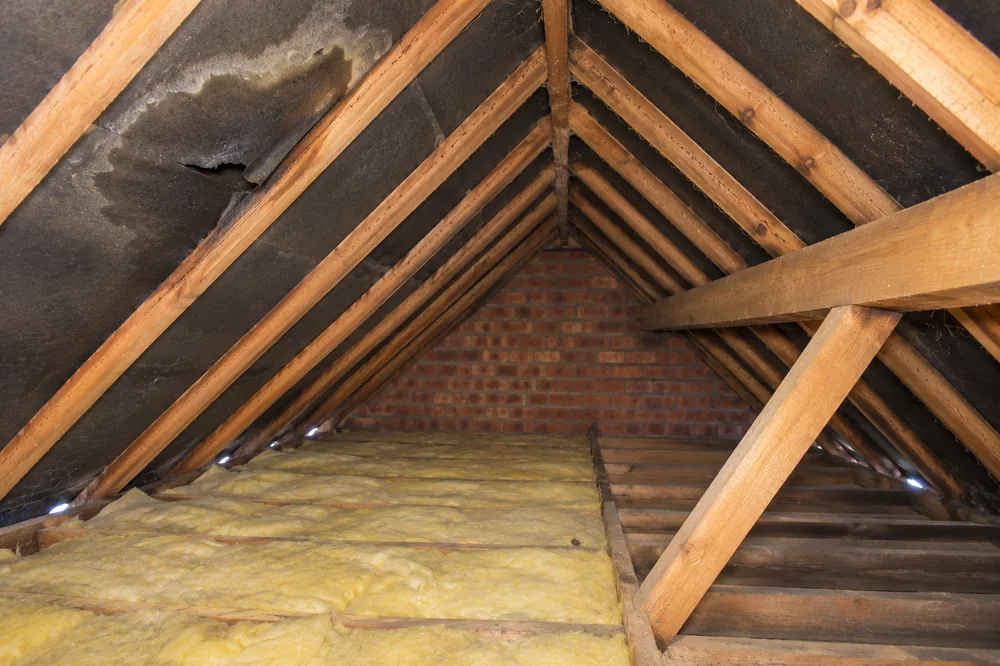
A slight dip in an old roof is common and often historic: the timbers settled decades ago and have not moved since. Worry when the sag is pronounced, recent or getting worse, or when it comes with cracked walls, split timbers or disturbed tiles. Those signs point to active movement, which needs a structural engineer.
Last reviewed by Matt Novell
What causes a roof to sag?
Timber bends under load over time. How much depends on the size of the timbers, the weight they carry and whether anything has changed since the roof was built.
- Undersized timbers. Older roofs were built by rule of thumb, and some rafters and purlins were simply too slender.
- A heavier covering. Slate replaced with concrete tile adds a great deal of weight.
- Removed supports. Struts, collars or ceiling ties cut out to make storage space or fit a loft conversion.
- Decay. Rot or beetle attack at rafter feet, purlin ends or wall plates, usually where water has got in.
- Roof spread. Rafters pushing the tops of the walls outward because nothing is tying them together.
- Overloading. Water tanks, heavy storage or solar panels on a structure not checked for them.
How do I tell old settlement from active movement?
Look for evidence of change. A roof that settled long ago looks tired but undisturbed. One that is still moving leaves fresh marks.
Signs of old, stable deflection: an even, gentle curve; tiles lying snug and undisturbed; old paint or dirt in any cracks; no change that anyone can remember; the same shape on neighbouring houses of the same age.
Signs of active movement: fresh cracks with clean edges in walls or ceilings; tiles that have recently lifted, slipped or opened up at the party wall; a gap appearing between the roof and a chimney or gable; timbers with bright, new splits; doors and windows upstairs starting to stick; the top of a wall visibly leaning out.
What should I look for inside the loft?
The loft shows the cause. Take a torch, stay on the joists, and look along the timbers.
- Rafters bowed downward between their supports.
- A purlin that has rolled, twisted or split, or pulled out of the wall.
- Struts that are loose, displaced or missing, with empty notches where they used to sit.
- Rafter feet that are dark, soft or crumbling where they meet the wall.
- Ceiling joists not fixed to the rafter feet, so nothing ties the roof together.
- Later additions: steel, extra timbers or props, which show someone has dealt with a problem before.
Who should I call?
It depends what you need to know.
A roof survey records the shape of the roof from above and the condition of the structure from inside, with photographs and measurements of what can be seen, and tells you whether the signs point to historic settlement or something that needs an engineer. It is the sensible first step when you do not yet know which you have.
A structural engineer calculates whether the timbers are adequate and designs any strengthening. If there are clear signs of active movement, go straight to an engineer. We are roof surveyors, not engineers, and our reports say where an engineer's opinion is needed.
Can a sagging roof be fixed?
Usually, and usually without rebuilding it. The repair follows the cause.
- Additional purlins or struts to shorten the span of the rafters.
- New rafters fixed alongside weakened ones.
- Collars or ties to stop the roof spreading.
- Replacement of decayed timber, with the source of the water dealt with first.
- A lighter covering, where the roof is due for re-covering anyway.
Structural alterations need a design from an engineer and approval from building control. Strengthening will normally stop further movement; it will not always return the roof to a straight line, and it does not need to.
Roof Condition Report
A roof condition report is an independent document describing the condition of every roof element, graded 1 to 3 on a traffic-light scale, with numbered photographs, a costed repair schedule in bands and a remaining-life estimate.
Sample report
Nine pages, fictional property: summary, lender page, graded findings and costs.
Common questions
No. Many older roofs have one and have been stable for generations. It becomes a concern when it is marked, when it is recent, or when there are other signs of movement such as cracking or disturbed tiles.
A valuer will usually note it and may ask for a specialist or engineer's report. If the report shows the deflection is historic and stable, lenders are generally satisfied. Active movement is likely to lead to a retention or a requirement for repair.
We can tell you what we see and whether the signs suggest historic settlement or active movement. Confirming structural adequacy takes an engineer's calculation. Where the evidence points that way we say so clearly.
It varies with the cause and the access. Adding struts or a purlin in an open loft is a modest job; work that needs the roof stripped is much larger. An engineer's design is needed before a builder can price it properly.
More guides
Flat roof flagged on a survey: what should I check?
Why flat roofs draw comment on surveys, how long each type lasts and what an inspection looks at.
Read the guideSurvey says the roof needs further investigation
What the wording on a Level 2 survey or valuation means, and the four steps that follow.
Read the guideMortgage retention for roof repairs
Why a lender holds money back for a roof, how the figure is set and how to get it released.
Read the guideWant the roof checked properly?
Independent inspection, graded report in 48 hours, no repairs sold.
01252 447 731